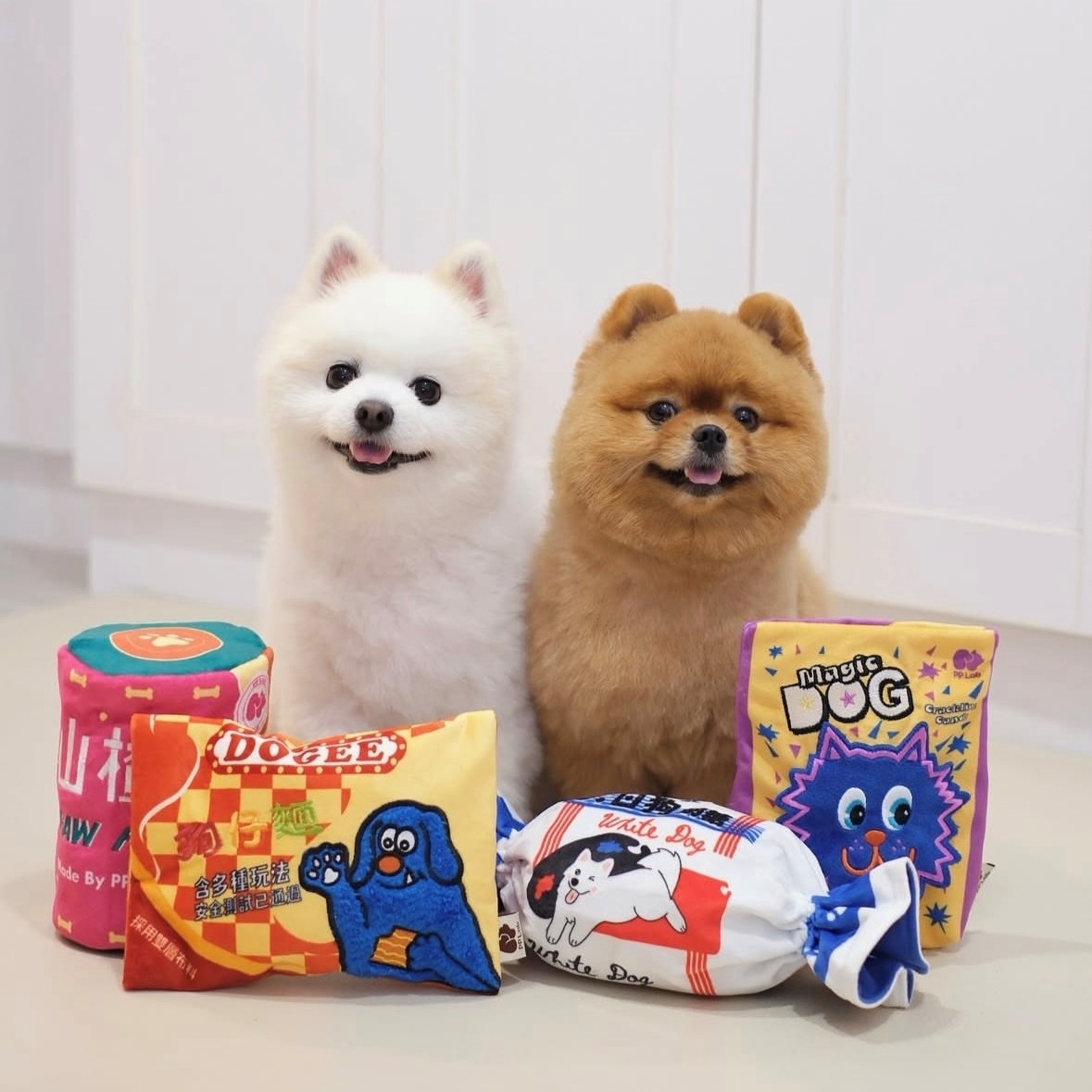
PP Laboratory

We firmly believe that superior design must stem from the core of animal ethology and physiological mechanics. Companion animals explore the world through high-frequency oral chewing, licking, and deep sensory foraging mechanisms . Therefore, safety can never remain a superficial slogan of "non-toxic." It must be translated into quantifiable physical and chemical parameters, verified through rigorous laboratory testing to deliver empirical validation.
| Core Dimension | Conventional Industry Practices | PP Lab Empirical Standard System | Biological Outcome Delivered |
|---|---|---|---|
| Testing Authenticity | Relies solely on suppliers' verbal claims or basic in-house factory inspections. | Independently commissions Intertek, a global authority, for blind testing and certification. | Eliminates human uncertainty; establishes supreme data credibility. |
| Mechanical Durability | Employs only manual pull tests, leaving risks of unraveling or loose components. | Withstands up to 100 lbs of bite force and 5Hz high-frequency vibration. | Eradicates structural disintegration, preventing ingestion of small parts. |
| Oral Contact Safety | Ignores risks of chemical migration under prolonged saliva soaking. | Tested against the stringent Japan Food Sanitation Law (JFSL) standards. | Zero dye migration under saliva contact, safeguarding long-term nervous system regulation . |
| Chemical Safety | Uses low-cost plastics containing risks of heavy metals and high phthalates. | All components maintain phthalates < 0.01%, with heavy metals completely undetected. | Maintains endocrine balance; eliminates chronic accumulated toxicity. |
The following data is extracted from the official Intertek laboratory test reports, covering mechanical durability, saliva fastness, and chemical migration safety:
| Testing Dimension | Test Standard & Protocol | Test Parameters & Environmental Conditions | Official Determination |
|---|---|---|---|
| Physical & Mechanical Safety | Bite Shaking Test for Pet Products (In-house Bite Shaking Protocol) |
• Bite Force: 100 lbs • Shaking Frequency: 5Hz (5 shakes per second) • Shaking Angle: 110° to 130° for 5 minutes continuous |
PASS No sharp points, sharp edges, small parts, malfunction, or material tearing. |
| Oral Contact Safety | Japan Food Sanitation Law Section IV (JFSL Specifications for Toys) |
• Coloring Matters Migration Test • Simulated extreme liquid saliva environment extraction |
PASS No running of coloring matters was observed. |
| Endocrine Safety (Phthalates-Free) | Hong Kong Laws Cap. 424 Sub. Leg. C (Toys & Children's Products Safety) |
• Phthalates Content Analysis • Comprehensive testing on logos, fasteners, and internal components |
PASS Phthalate content in all tested components was under 0.01% (well below the 0.1% limit). |
| Chemical Migration & Heavy Metals | Japan Food Sanitation Law (Surface Coating & Synthetic Resin) |
• Soluble Lead (Pb), Cadmium (Cd), Arsenic (As) • Potassium Permanganate (KMnO4) consumption & evaporation residue |
PASS All chemical migration and heavy metals elements were ND (Not Detected). |
The State Administration for Market Regulation and the Standardization Administration of China officially implemented GB/T 43839-2024 (Safety Technical Requirements for Companion Animal Products). This is the industry's first national standard regulating physical mechanics, chemical limits, and labeling requirements for pet products.
| GB/T 43839-2024 Core Mandate | Regulatory Baseline Requirement | PP Lab Material Performance |
|---|---|---|
| Mechanical & Physical Safety | Requires sturdy seams and prevents small components from detaching to avoid choking hazards. | Successfully withstood 100 lbs of tension under mechanical fatigue testing, maintaining total structural integrity. |
| Migration of Heavy Metals | Strictly limits soluble heavy metal migration (Lead, Cadmium, Arsenic, etc.) under body fluid extraction. | Analyzed via spectroscopy by Intertek; heavy metals migration elements were ND (Not Detected). |
| Hazardous Chemical Limits | Imposes strict limits on plasticizers (phthalates like DEHP, DBP, etc.) in polymeric materials. | Adheres to child-safety specifications; phthalates residue is minimized to < 0.01%. |
To maintain absolute data integrity, we publish the traceable official registration numbers of our reports. Customers and wholesale partners can verify the validity of these certifications at any time.